Show Mobile Navigation
Apple
Showing posts with label Apple. Show all posts

Tuesday, March 6, 2018

Apple reseller in Malaysia forced to cancel $50 iPhone sale when thousands of people showed up

Samuel Enife - 2:15 AM

A Malaysian retailer, Switch, had no choice but to suspend a clearance sale that it advertised to sell off some of its demo units including iPhones between the 5S through the iPhone 7. iPad Minis, iPod Touches, iMacs, Apple TVs, and MacBooks.
All in all, there was probably a total of 200 Apple units altogether, and just 10 iPhone 5S devices marked at $50 with very limited quantities of a sub-$100 iPad, a sub-$150 MacBook Air, and a 24-inch iMac for $255 (which all sound way too good to be true). The problem here was that over 11,000 people showed up, according to a Facebook post, for a clearance sale that probably should not have been advertised online.
The queues were so ridiculous that crowds filled the inside of the mall, starting at the store’s location and ended outside of the building and somewhere towards the parking lot. To make up for the huge inconvenience, Switch (the retail store), offered discounts on newer iPhones over the weekend.
The lesson here is if you show up to a flash sale and there are already more than three-thousand people lined up, chances are if you head home you probably won’t miss out on a lot.
Source | Via

Saturday, March 3, 2018

J.P. Mogan reduces iPhone X production estimates for Q1 and Q2

Samuel Enife - 1:56 AM
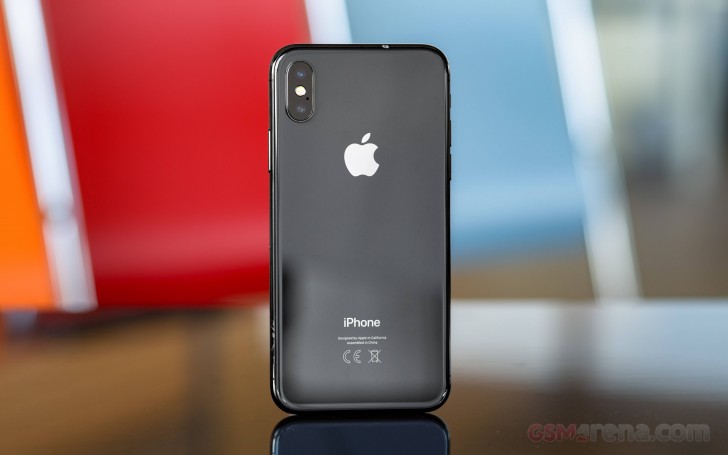
Securities firm JP Morgan has reduced its production estimates of the Apple iPhone X by 25% from 20 million in Q1 to 15 million. Meanwhile, analyst Narci Chang also lowered estimates by 44% from 18 million units to 10 million for Q2.
When it comes to the sale of iPhones overall, Q1 forecast was reduced to 52M from 55M while Q2 was reduced to 42M from 45M, not as much of a reduction, but still a reduction nonetheless. This is actually - the second one by J.P. Morgan.
Apple’s sales appeared strong when it released the first financial report that included iPhone X sales. However, when you take into account that the average revenue per device was $797 as opposed to the $755 forecasted average, the company actually sold fewer devices year-over-year.
Apple’s $1,000 unicorn proved that consumers are willing to spend a lot of money on a handset, but perhaps not enough people are willing to, and Apple should reconsider its pricing structure for 2018 smartphone if it wants its number of devices sold to keep growing.
On the plus side, Apple saw growth in iPad sales and has seen the most growth in Apple Watch sales with the launch of its cellular-enabled Apple Watch Series 3. Will 2018 be the year that Apple pushes for more innovation in the smartphone space?
Source

Friday, February 23, 2018

AirPods to get "Hey Siri" detection, water-resistance in future

Samuel Enife - 12:58 AM
The next generation of Apple's popular AirPods will feature "Hey Siri" voice detection support, according to a report by Bloomberg. A subsequent model is also expected to bring water-resistance.
The current AirPods model uses the W1 chipset and requires the use of a double tap gesture to invoke Siri. The next generation model will reportedly use a new version of this chipset, which will be able to detect the "Hey Siri" command without having to use the gesture, much like the iPhone or the HomePod.
That is what's expected this year. However, according to the report, the AirPods will also be water-resistant in the future. This should allow them to be used in the rain or during heavy workouts. These are expected to arrive as early as next year.
We will likely hear more about Siri on AirPods at WWDC this year.

Wednesday, February 7, 2018

Apple sets record for most wearables sold in a single quarter

Samuel Enife - 1:40 AM
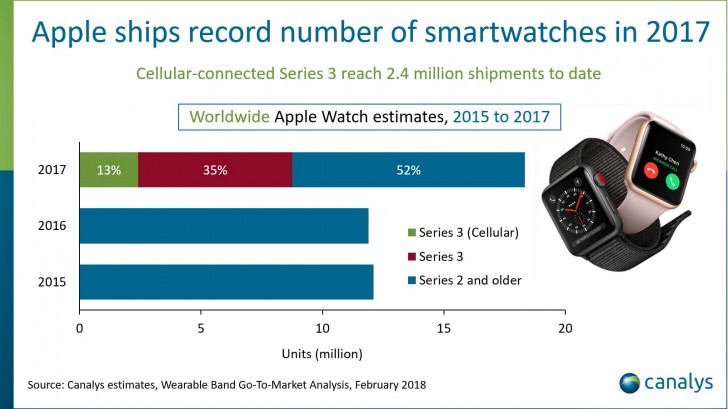
Apple has shipped a record 18 million smartwatches in 2017 and almost half of those came in Q4 - 8 million. Coincidentally, that's also a record for most shipped smart wearables for a single quarter, by any maker.
Out of the total 18 million shipped Apple Watches, close to 9 million were the latest Series 3. According to Canalys data the LTE-powered Apple Watch Series 3 is the fastest-selling LTE wearable on the market, totaling 1.6 million units shipped.
Apple's Q4 numbers were a solid 32% higher year over year than Q4 of 2016 while 2017 as a whole saw 54% more shipped Apple Watches than 2016.
Source

Saturday, February 3, 2018

Samsung stays on top with 317M shipments in 2017

Samuel Enife - 1:29 AM
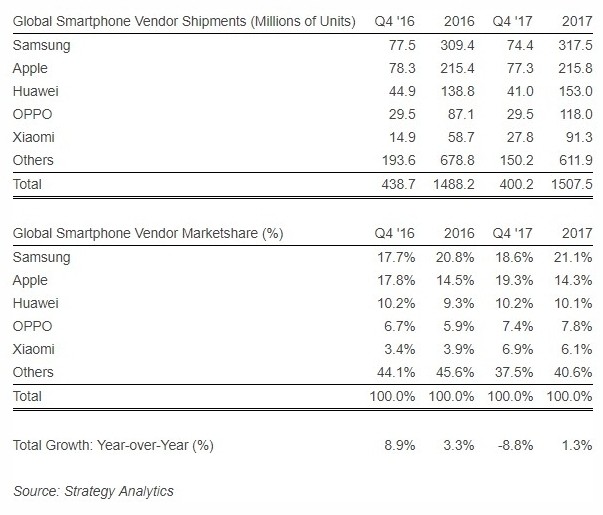
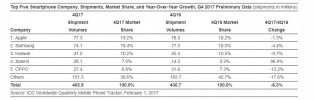
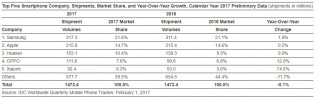
International Data Corporation and Strategy Analytics published their reports on the global smartphone shipments in Q4 and the full year 2017. The data reveals that Apple shipped 77.3 million iPhones in Q4 2017, most of any other manufacturer. For the full year, Samsung held its top position, shipping more than 317 million phones.
Xiaomi impressed analysts by almost doubling its shipments - 28.1 million between October and December 2017 versus just 14.3 million for the same period in 2016.
Data from Strategy Analytics
The holiday season brought anything but smiles to manufacturers with 4 out of 5 top companies registering a decline in shipments YoY. According to Strategy Analytics, the period marked the “biggest annual fall” in smartphone history from 438 million shipments in Q4 2016 to just 400 in Q4 2017.
Data from IDC Data from IDC 
Data from IDC
According to both analyst companies, one of five shipped smartphones in 2017 is a Samsung. Apple stays second with 14.7% market share, followed by Huawei and Oppo, keeping the Top 4 the same as in 2016.
Although data from Strategy Analytics and IDC differs a bit, both companies report shipments for the past 12 months of around 1,5 billion smartphones. The amount is almost the same as in 2016, revealing a massive oversaturation of the market.
Source 1 • Source 2

Friday, February 2, 2018

Apple now sells certified refurbished iPhone 7 and iPhone 7 Plus, starting at $499

Samuel Enife - 1:04 AM
Virgin Mobile isn't the only company that's now offering refurbished iPhone 7 and iPhone 7 Plus units to eager customers. Apple itself has stepped into this market starting today.
You can buy a certified refurbished iPhone 7 for $499 (with 32GB of storage), $589 (128GB), or $679 (256GB). The iPhone 7 Plus is priced at $599 (32GB), and $689 (128GB), respectively. The bigger model isn't offered with 256GB of storage at this time.
On average you're saving around 9-10% when buying refurbished from Apple compared to what these devices cost brand new. Note that purchasing an Apple certified refurb means you get all the original accessories, a one-year warranty, and can even use AppleCare.
Source | Via

Saturday, January 27, 2018

Poor iPhone X sales slow down Samsung OLED business

Samuel Enife - 2:45 AM
Just days after the report that Apple shipped 29 million iPhone X units, industry insiders from South Korea reported Samsung is lowering the production rate of one OLED factory by 10%. The Korean manufacturer is also postponing expansion plans in Vietnam amid growing uncertainties regarding the Apple flagship future.
A source reportedly told that “the A3 plant is specifically designed to supply panels to Apple only. Unless supplies to Apple do not recover, it is unavoidable for Samsung to see weaker earning this year”. The factory produces 135,000 OLEDs per month of which more than 100,000 go to Cupertino.
Poor iPhone X sales slow down Samsung OLED business
While there is uncertainty how Apple will proceed with the iPhone X, Korean news agencies report that the company is preparing two phones with the same panel - one is 5.85” in diagonal, and another model comes with 6.46” screen. LG Display might be the manufacturer.
Source 1 • Source 2 (in Korean)

Wednesday, January 24, 2018

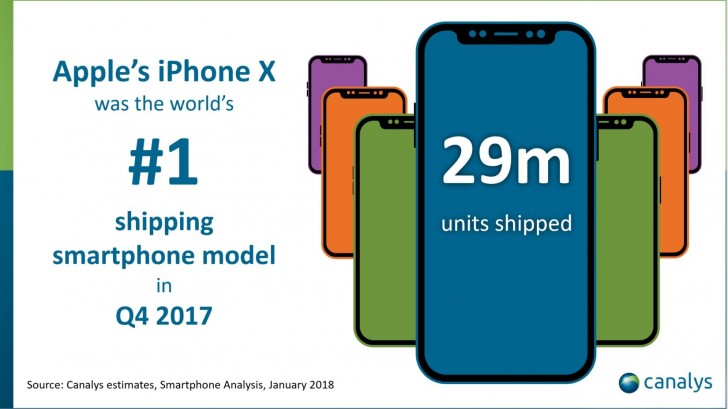
Canalys: Apple ships 29M iPhone X units in Q4 2017

Samuel Enife - 1:46 AM
Apple shipped 29 million iPhone X phones in Q4 2017, making the flagship the best-selling device over the holiday season. The $999 model was mostly bought in carrier-centric markets where Apple has a big user base that can afford the cost. An interesting outtake of the report is that almost a quarter of all shipments, 7 million, were in China.
Canalys: Apple ships 29M iPhone X units in Q4 2017
Canalys says although the numbers are impressive for a phone with a $999 price tag, they are still lower than the industry and the Cupertino company expected.
Apple struggled with supply in the first weeks in November but managed to catch up throughout December. The biggest benefit for the manufacturer is loyalty from customers who went for trade-in programs to offset the high price tag.
Apple also shipped iPhone SE, iPhone 6s, iPhone 7and the new iPhone 8 duo during Q4 2017. Due to their iOS 11 update eligibility, they are seen as value for money options. Having a big portfolio of phones with the latest OS is allowing Apple to meet its high shipment targets in the premium segment.
Source

Saturday, January 13, 2018

iPhone 6 takes massive performance hit after Spectre patch

Samuel Enife - 1:12 AM
We always knew that patching the recently-discovered Meltdown and Spectre vulnerabilities will involve a drop in performance, especially in older devices. The magnitude of the drop is still being examined, but the early results don’t look good.
In at least one case, an iPhone 6 saw its Apple A8 lose 40% of its CPU performance after going from iOS 11.1.2 to 11.2.2. The test was run by Dutch entrepreneur Melvin Mughal who got the following results on his phone before and after the update.
Before Spectre updateAfter Spectre updatePerformance change
iPhone typeiPhone 6
iOS versioniOS 11.1.2iOS 11.2.2
Single-Core Score1561924-41%
Multi-Core Score26651616-39%
Both single and multi-core performance are strongly affected and memory access took a hit as well. That was to be expected as both vulnerabilities exploit the CPU’s cache.
Since the test was run on the same phone, the scores are not affected by the battery-related slowdown. That does make it harder to collect more data, however.
For example, here’s one result from Geekbench’s database where the scores remain on pre-update levels and another one, which is closer to Melvin’s numbers. There are more 11.2.2 scores like that, but it’s hard to tell how much of the inconsistency is due to throttling due to an old battery.
Source

Tuesday, January 9, 2018

Apple rumored to move to microLED displays for its wearables

Samuel Enife - 12:55 AM
Industry sources claim that Apple is looking to adopt microLED display technology for its wearables as a move to reduce its reliance on OLED manufacturers (i.e. mostly Samsung but also LG).
What is microLED/µLED? It is very similar to OLED in that each pixel is built up of individually-controllable LEDs. This means total darkness is possible (no glowing blacks, amazing contrast) and that power consumption reduction is easy (just use a black background).
However, these new displays use classic LEDs, not organic ones. This means they offer higher maximum brightness and much improved efficiency. And they can be made flexible too (for curved screens).

One problem, though - even though they were invented in 2010, they are still not ready for prime time. This is why Apple is unlikely to use microLED on the iPhone just yet.
However, the company did acquire LuxVue, a microLED company in Santa Clara, in 2014. Foxconn invested in a similar company (eLux) and Samsung may be looking to acquire PlayNitride, another competitor.
Some insiders claim that Apple will use a facility in Taiwan it bought in 2014. This facility used to be a Qualcomm shop, churning out Mirasol displays - the failed color display tech for e-readers and smartwatches.
Source

Saturday, December 30, 2017

iFixit drops the prices for its iPhone battery replacement kits to $29 or lower

Samuel Enife - 2:37 AM
Earlier today we saw that Apple issued an apology for not clearly communicating that it was capping the performance of certain older iPhones when their battery health degraded and offering to drop the price of battery replacement for these devices down to $29 for the entire year of 2018.
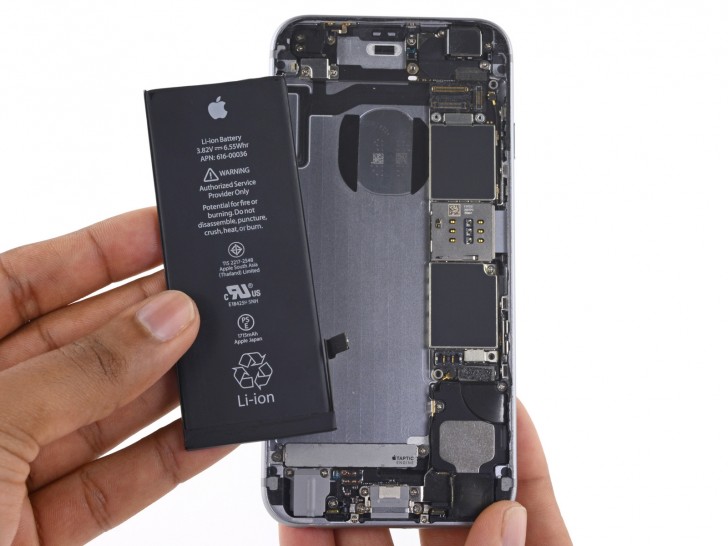
Now, iFixit has announced that it too will be slashing the prices for all of its iPhone battery replacement kits down to $29 or lower. These kits are available from iPhone 7 and all the way back to iPhone 4S.
A typical iFixit battery replacement comes with the battery along with all the tools that you would need to open up the phone and replace it yourself.
This is where it gets tricky and where you need to read closely before you open a new tab and order one of these for yourself. The person replacing the battery is you. Not a certified Apple professional but you, a person with $29 and some spare time. Like most phones today, iPhones are not meant to be opened by non-qualified personnel. If you mess something up, that's on you, not iFixit and certainly not Apple, who will be more than happy to charge you even more to fix whatever you broke on top of that battery.
The most important thing to consider is that the display is glued to the phone. After you unscrew the phone you literally have to pull out the display using the provided suction cup. If you snap a cable or the display itself while doing this, that's another $129 to get the display fixed.
So while this is a great option for those devices that are not part of Apple's replacement program and for people who know what they are doing, if your device is one of those specified by Apple then it's best to have the experts do it for you.
Source

Apple issues statement regarding iPhone batteries and performance

Samuel Enife - 1:12 AM
Last week, we saw reports of Apple slowing down the performance of older iPhones. Back then, Apple had provided a short statement to media stating it was doing this to protect devices with older batteries from suddenly shutting down. Obviously, that didn't go down so well with people who have had theories of Apple intentionally slowing down older iPhones, with multiple lawsuits being filed along with the hue and cry that comes with these sort of things.
Today, Apple has released a full and formal statement regarding the situation surrounding the iPhone batteries and performance.
Right off the bat Apple doubled down on its claim that it has never and will never intentionally slow down the usable life of its devices or degrade its user experience in any way to drive customer upgrades and that its goal has always been to create products customers love and last as long as possible
First and foremost, we have never — and would never — do anything to intentionally shorten the life of any Apple product, or degrade the user experience to drive customer upgrades. Our goal has always been to create products that our customers love, and making iPhones last as long as possible is an important part of that.
After that, Apple took time to elaborate on how batteries age and what it has done to prevent the phone from shutting down. This is just a longer explanation of the statement Apple initially release. Basically, batteries get old and cannot provide peak energy loads, which causes the device to shut down. To prevent this, iOS 10.2.1 released in January 2017 will cap the performance of iPhone 6, iPhone 6 Plus, iPhone 6s, iPhone 6s Plus and iPhone SE when it detects a weak battery to prevent the device from shutting down. This feature was extended to the iPhone 7 and iPhone 7 Plus in iOS 11.2 released earlier this month.
The important thing to realize is the performance cap is temporary and as soon as the aged battery is replaced the performance will go back to what it used to be.
This also does not affect devices other than those mentioned above. None of them have this ability to cap performance depending on battery health.
Since it essentially comes to the battery, Apple also announced that it will cut down the prices of out-of-warranty battery replacement from $79 to $29. This applies to iPhone 6 and newer devices, starting late January 2018 to December 2018, worldwide.
Second, Apple will release an iOS update in early 2018 that will convey the health of the battery in the software to let users know if it is affecting their performance and if they need to replace it.
Apple also said it is working on improving how it manages performance and unexpected shutdowns as batteries age.
While it is good that Apple finally came clean with what it is doing and the drop in battery replacement cost is a nice touch, this whole thing could have been avoided if the company was better at communicating with its customers from the beginning. That part is entirely on Apple. Surely, Apple would have been aware of the conspiracy theories of it intentionally slowing down the performance of its older devices so people upgrade to newer ones, which doesn't even really apply in this case as this performance capping update came out in January 2017 and applies to a handful of iOS devices while the conspiracy theories are old as the iPhone itself. In such a situation Apple should have been extra vocal about what it is doing with performance on older devices. Sure, some people would have still complained but the overall result would have been better than current situation.
If you are an iPhone user, new or old, there are a few things worth remembering. If you have one of the aforementioned devices that feels slow, you could have a bad battery that needs replacing. Or, the reason your device is slow is just because it's old and old devices running new software are always going to be slow. It's the same reason why a four year old Android phone feels slow now or a ten year old computer feels slow running the latest version of Windows. It's because the software demands have outpaced the hardware, not because their makers have put a ticking time bomb in there.
Second, and this shouldn't need explaining because it feels like common sense, but no company, Apple or otherwise, can benefit from making its devices worse. It just increases the likelihood of people switching to other brands when they upgrade, not to the brand that they think intentionally ruined the performance of their old device. Planned obsolescence might work in segments where there isn't a lot of competition and your customers have have no choice but to buy from you, but not in a segment as highly competitive as smartphones where every misstep can lose you customers.
So maybe it's time to revisit this whole situation in your head from a rational perspective and see if all the fuss was worth it.


Wednesday, December 20, 2017

Upgraded AirPods for 2018

Samuel Enife - 1:41 AM
KGI Securities analyst Ming-Chi Kuo today issued a pair of notes to investors covering the availability of AirPods and the possibility for a revision to the hardware in the second half of 2018.
Since their launch in 2016 Apple struggled to keep up with demand for AirPods. Even so, Kuo estimates that AirPod shipments will experience 100 percent growth and reach 28 million units in 2018.
Kuo didn't offer up any details regarding the design or feature set for the revised AirPods other than that they will include a "smaller quartz component". Kuo also stated they could have a higher average selling price.
Currently manufactured by Inventec, Apple has also recruited Luxshare to manufacture AirPods. Additionally, it's believed that a constraint in the supply of the RF printed-circuit boards for AirPod batteries are one reason why Apple can't meet the demand.
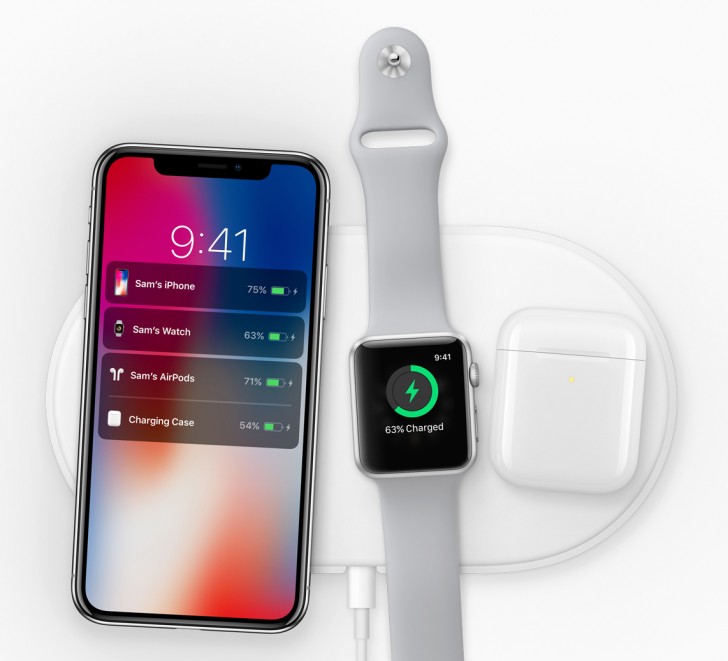
Next year Apple are launching the AirPower mat that is capable of charging an iPhone, Apple Watch and AirPods simultaneously. Current AirPods required the new inductive charging case, whilst it's possible you'll be able to buy a skew of the AirPods that include the new charging case.

Thursday, December 7, 2017

Apple wins a trademark lawsuit against Xiaomi in Europe

Samuel Enife - 1:04 AM
Xiaomi filed an application in 2014 with the Intellectual Property Office of the European Union (EUIPO) to register Mi Pad as a trademark in the EU. Apple challenged the form on the grounds of English-speaking consumers might read Mi Pad as “my pad, ” and therefore this sounds too close to iPad.
The General Court of EU said the complaint upheld by EUIPO in 2016 was correct, therefore not allowing Xiaomi to trademark its tablet series.
Apple iPad Xiaomi Mi Pad 
Apple iPad vs. Xiaomi Mi Pad
“The dissimilarity between the signs at issue, resulting from the presence of the additional letter ‘m’ at the beginning of ”Mi Pad“, is not sufficient to offset the high degree of visual and phonetic similarity between the two signs,” the Court said in a statement.
Xiaomi can still appeal in front of EU’s highest court - the Court of Justice of the EU, based in Luxembourg.
Source (pdf)

Wednesday, December 6, 2017

SIM-free iPhone X now available from Apple in the US

Samuel Enife - 2:57 AM
Apple had troubles delivering the new iPhone X after its launch on November 3. The delivery dates are already fixed to 5 business days (from 5 weeks in early November), and now Cupertino also offers the phone completely SIM-free.
SIM-free iPhone X now available from Apple in the US
The unlocked iPhone X will work with any carrier, including support for all CDMA and GSM networks. Offered in Silver or Space Gray, the bezel-less Apple phone costs $999 for the 64GB version and $1,149 for the 256 GB one.
If you can’t wait for a December 12 shipment, there is always the pick-up option where you get it straight from an Apple Store.
Source

Sunday, November 26, 2017

Analyst: iPhone X availability improved due to increased production, demand still strong

Samuel Enife - 12:56 AM
Apple iPhone X is a hard device to manufacture. It took more than a month longer than the iPhone 8 and iPhone 8 Plus to arrive to the shelves and even so initial stock was pretty limited and shipping estimates increased to 5-6 weeks.
Yet stock quickly started to improve after the launch and currently waiting times are down to 1-2 weeks. Even the expansion to 14 new markets yesterday didn’t do the iPhone X availability any harm, which means one of two things – either Apple has way more units to distribute around now or the demand has sharply declined after the initial hype died down.
According to often reliable KGI analyst Ming-Chi Kuo it’s a boost in production that we have to thank for it all. In a note to investors he said that Apple was able to address some major production bottlenecks and is currently getting 450,000 to 550,000 units per day, up from to 50,000-150,000 in the weeks ahead of the launch.
Kuo estimates that Apple only had 2 to 3 million units on launch day, which explains why so few of those eager to buy it then managed to grab a unit. With production going much faster now though the company is not only able to catch up on those backorders, but also deliver new ones much faster.
We’ll know for sure if Kuo was right once Apple publishes its Holiday quarter report and guidance for the first three months of 2018. That should reveal if the demand for the $999 iPhone X was as high as everyone anticipated.

Tuesday, November 21, 2017

KGI: Apple to use Qualcomm modems for some 2018 iPhones

Samuel Enife - 3:13 AM
Earlier this month w KGI said that Apple is preparing three phones for 2018, two of them with an OLED screen. Latest information from KGI analyst Ming-Chi Kuo is that at least one of the phones might have an X20 modem by Qualcomm, despite the mountain of lawsuits between the two companies.
Source: KGI
In the latest note to investors, Kuo predicts Intel will provide 70-80% of the modems, the rest of the production going to Qualcomm. The baseband chips will offer better LTE transmission speed due to the 4x4 MIMO antenna design support.
2018 iPhones are also expected to have DSDS (dual-SIM dual standby) and dual LTE connections. These are features seen in dual-SIM smartphones, so we might see the first iPhone with a dual-SIM card slot. We might also see a single SIM slot with the other card being eSIM.
Via

Wednesday, November 15, 2017

iPhones in 2019 to come with a 3D sensor on the back too

Samuel Enife - 1:26 AM
Apple’s TrueDepth selfie camera features a 3D sensor and starting from 2019 the rear camera might have a 3D sensor of its own. The company is allegedly talking to several component suppliers and evaluating its options.
The rear 3D sensor will help enhance Apple’s ARKit as it will give true measurements of distance rather than the estimates provided by the camera setup. Presumably it will also be used to enhance Portrait mode, similar to the selfie camera.
Unlike the front sensor – which users the structured light approach of the original Kinect – the rear sensor will use a time-of-flight camera. This is the tech used by the second-gen Kinetic (the one that shipped with the Xbox One).
Time-of-flight sensors are already used in Project Tango phones like the Lenovo Phab2 Pro and Asus Zenfone AR.
iPhones in 2019 might have a 3D sensor on the back too
Google has been working with Infineon for Project Tango sensors, which is one of the companies that Apple has been talking to. Sony is another, as well as Panasonic and STMicroelectronics.
Source

Monday, November 13, 2017

KGI: iPhone 8 demand lower than expected, but iPhone X going strong

Samuel Enife - 1:10 AM
Often reliable analyst Ming-Chi Kuo from KGI has released another note to investors today, attempting to predict the performance of Apple’s new smartphone trio during the key holiday quarter and at the start of 2018.
Kuo estimates that the iPhone X will sell between 22 and 24 million units in the last quarter of the year and will maintain its strong performance in the early months of 2018. The flagship’s production is expected to grow 35% to 45% over the next quarter as supply shortages finally ease off. Meanwhile, people will allegedly come to realize that their concerns about the major UI overhaul caused by the dropping of the home button were unfounded.
As for the other two new iPhones – the iPhone 8 demand is expected to remain lower than expectations and Apple will reduce its production by more than half in Q1 of 2018. The iPhone 8 Plus, on the other hand, slightly exceeds predictions, as it remains the solitary option for those wanting a large screen iPhone.
Still, Kuo predicts that Apple and its manufacturing partner Hon Hai will switch some of the iPhone 8 Plus manufacturing lines to produce iPhone X to help boost production. That should enable 25 to 27 million units of the anniversary iPhone to reach the market before the end of the year.
Source

Sunday, November 12, 2017

Some Apple iPhone X OLED screens plagued by green lines

Samuel Enife - 3:14 AM
Apple is still dealing with the iPhone X responsiveness issues when exposed to cold temperatures, but it may have another problem on its hands. Apparently some iPhone X units are developing an issue with a green line going vertically across the display. All the affected units were reportedly working fine when taken out of the box, but after some time the line pictured below appears.
By the looks of it the issue is either caused by an issue with the display controller or by the ribbon cable connecting the screen, but it’s hard to specify without having seen a defective device in person.
Apple is yet to comment on the matter, but users who have experienced the issue on their phones say that they got their phones replaced under warranty. So if your iPhone X happens to develop such an issue – take it straight to the company’s local office to get your replacement.
Given that the issue takes some time to develop, it’s hard to estimate how wide-spread it is. Apple choose a really unique screen for the iPhone X, not to mention that it’s the first time they went with OLED on a phone, so at least some issues were to be expected. Hopefully it doesn’t end up inconveniencing too many users.

Via 1 | Via 2
Previous
Editor's Choice